HPHT Lab Grown Diamonds: History, Process, and Benefits


If you’re a diamond connoisseur, you must have definitely heard of the term HPHT—high pressure, high temperature. It’s one of the methods used to create lab-grown diamonds.
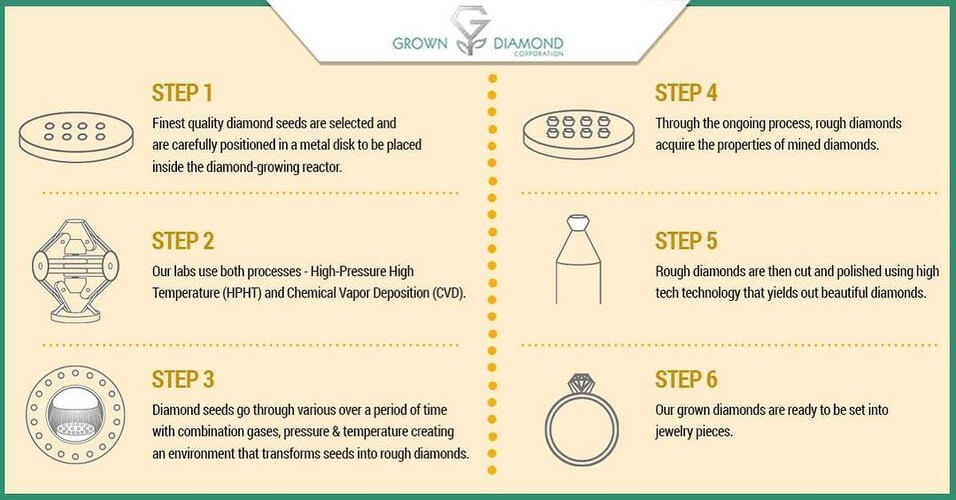
This method mimics the process that forms diamonds under the earth. HPHT is one of the most prevalent methods for creating the best lab-grown diamonds. The other method is chemical vapor deposition (CVD).
In this article, we’ll tell you all about the HPHT technology for creating manufactured diamonds. Ready? Let’s dive in!
The development of HPHT diamond technology can be traced back to the mid-20th century, when scientists began exploring ways to create real diamonds in laboratories by replicating the conditions under which natural diamonds are formed deep within the Earth.
In 1955, a Swedish scientist named Anders Kampe successfully produced synthetic diamonds using the HPHT technology, marking the beginning of a new era in lab-made diamond manufacturing.
HPHT diamonds are created by putting carbon in the form of graphite through intense pressure and high temperatures. This process replicates the natural conditions in the Earth’s crust. This leads to the carbon atoms rearrange into a crystal lattice structure, forming a diamond. This process is carried out in a controlled laboratory environment, ensuring the production of high-quality lab-grown diamonds that are virtually indistinguishable from natural, mined diamonds.
1. Cost effectiveness
One of the biggest benefits of HPHT manufactured diamonds is that they are more affordable than natural diamonds. The controlled laboratory environment allows for the production of larger diamonds with fewer impurities, offering consumers a cost-effective alternative without compromising on quality or aesthetics. Customers can buy the best lab-grown diamonds that are at least 30 to 40% cheaper than mined diamonds.
2. Enhanced clarity
Natural diamonds may contain internal inclusions or blemishes. But since laboratory diamonds are made in labs that allow controlled processes, HPHT technology can be employed to eliminate or minimize imperfections, resulting in diamonds with enhanced clarity. The process allows for the production of flawless or near flawless diamonds, meeting the demand for high-quality lab-grown diamonds.
3. Size and carat weight
Mined diamonds are often smaller in size and carat weight. Mined larger diamonds are rarer and more expensive. HPHT diamonds, on the other hand, can be created in desired large sizes and carat weight. Customers can get lab-grown diamonds made based on their budget and preferences.
4. Color enhancement
HPHT technology can be used to alter the color of diamonds. By subjecting lab-made diamonds with certain impurities to specific conditions, the color can be enhanced or modified. This process has been particularly successful in producing diamonds with a variety of colors.
5. Environmentally friendly
The HPHT diamond process is conducted in a controlled laboratory atmosphere, reducing the environmental impact associated with traditional diamond mining. Engineered diamonds eliminate the need for extensive land excavation and minimizes the carbon footprint, aligning with the growing global emphasis on sustainability.
HPHT lab grown diamond technology has not only transformed the diamond industry but has also provided consumers with a range of benefits, as mentioned above. As technology continues to advance, HPHT diamonds are likely to play an increasingly significant role in meeting the demands of consumers who seek both quality and value in their diamond purchases.